
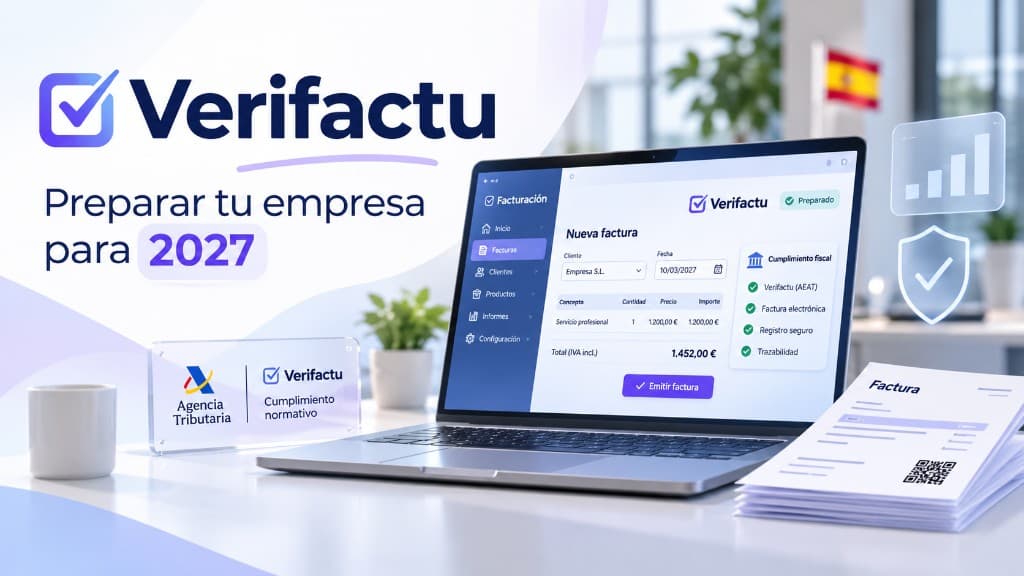
If you run a company in Spain and still rely on legacy invoicing software, two dates in 2027 matter. Leaving adaptation to the last minute often means vendor queues, migration risk, and operational downtime—not just a compliance checkbox.
This is about computerised invoicing systems (SIF) and the VERI*FACTU modality under anti-fraud rules. Your billing software must generate and store invoice records in a controlled, traceable way.
Reference deadlines (Spain)
- 1 January 2027: compliant SIF for corporate income tax taxpayers in the cases set out in the regulation.
- 1 July 2027: same requirement for other obliged businesses and professionals under applicable rules.
Always check the current calendar on the Spanish Tax Agency site and Royal Decree 1007/2023.
What changes in 2027
Your invoicing module must meet technical requirements: standard records, integrity, traceability, and—in some setups—submissions to the Tax Agency.
Do not mix up two layers: having a compliant SIF versus operating in VERI*FACTU (systematic record submission) or NO VERI*FACTU. Your tax adviser must confirm which applies to you.
Who is affected
In general, businesses and professionals issuing invoices with software, subject to exclusions in the rules and AEAT FAQs. Ask your software vendor for a concrete adaptation roadmap.
Can you keep using Excel?
Excel does not replace a SIF when the law requires a regulated computerised invoicing system. If billing still lives in spreadsheets, treat that as a 2027 risk signal.
Review your management stack
A good moment to connect orders, customers, warehouse, and admin. Custom ERP development is not mandatory for Verifactu, but it can help when you need bespoke workflows. andruma builds custom ERP; we do not claim AEAT certification unless a specific project proves it.
Still running disconnected tools? See how we can build ERP tailored to the way you work.