
Custom cardboard boxes in the Vallès Oriental
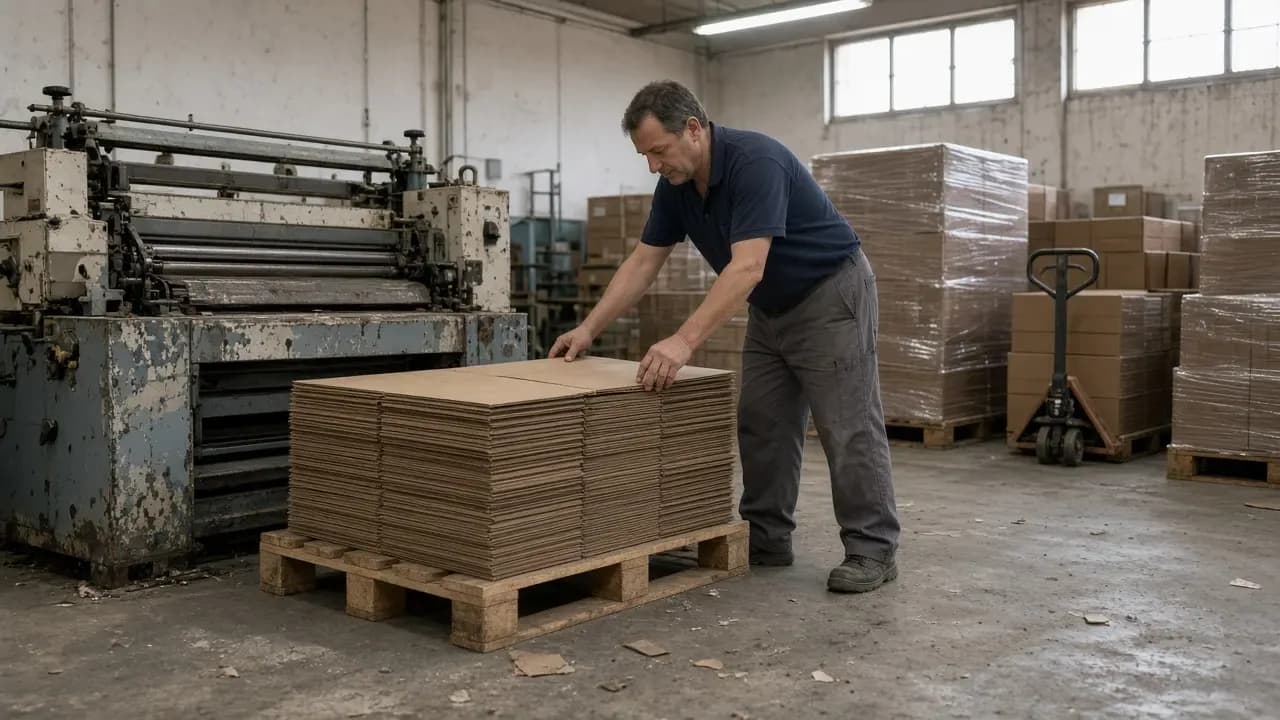
A corrugated packaging factory in Granollers, with a workforce of about thirty-five people, produces custom boxes for food, cosmetics and logistics companies in Catalonia. Every week, dozens of small orders arrive with different dimensions, board grades and print designs. Corrugated board comes from an external supplier, and the factory runs a flexo press, a die-cutter and a folding and gluing line.
Accounts and invoicing sat in a standard package. Everything else (quotations, manufacturing orders, board consumption and machine planning) lived in Excel spreadsheets that the production manager updated at the end of the afternoon. It worked while orders were large and repetitive. When customers started asking for short runs and faster deliveries, that way of working could no longer keep up.
Quotations, board and machines in separate files
A normal order passed through four pairs of hands before it reached a machine. Sales calculated the quotation on their own sheet (dimensions, board grade, number of colours, die); administration typed it by hand into the invoicing package; production copied it into their planning spreadsheet; and the warehouse ordered board from what they knew of the order. If the customer changed a dimension or the quantity by email, the change reached some people and missed others.
The mistakes had a cost: board ordered in the wrong grade, dies that were not ready on the planned day, and format changes on the flexo that could have been grouped and were not. Nobody knew with any certainty what margin each order left until weeks later.
What they were looking for (and what they were not)
Management had looked at an ERP for factories in the print sector, but those packages were built for larger companies, with modules they were never going to use and a long implementation. They also did not want to change the machinery or the way people worked on the shop floor. They needed a production management system that spoke their language: internal dimensions, board grade, die, colours and minimum run length.
A production management system designed for board
The work started in the factory, not in a meeting room. Real orders from recent months were reviewed, and the team noted which data each machine needed and at which point information was lost. From that, custom software was designed in three phases.
Phase 1: quotation and order in a single record
The quotation is calculated in the same tool, using the company's own rules (board price by grade, die cost, waste by format). When the customer accepts, the quotation becomes an order without anyone typing it again, and any later change is recorded with a date and a name.
Phase 2: machine planning and board consumption
Each order generates its manufacturing order with the flexo, die-cutting and folding operations. The production manager can see the load on each machine by day and can group jobs that share a format or the same colours, to reduce changeovers. Board requirements come out of the order itself, and the warehouse orders them from the supplier with the correct dimensions and grades.
Phase 3: shop-floor reports on a tablet
Operators mark start, finish and good units from a tablet beside each machine. There is little to type: choose the order, press, and note the waste if there is any. With that data, the office knows where each order stands without going down to the factory floor to ask.
Accounts stayed on the package they already used. The new system passes delivery notes and invoices across, so the work is not done twice.
Results after six months
The figures are cautious, but they are clear for a plant of this size. Preparing a quotation went from about twenty minutes to about seven. Board errors (wrong grade or wrong dimension) fell from several a month to isolated cases. Grouping jobs by format cut changeovers on the flexo by close to 15%, and board waste fell by about two percentage points. The production manager stopped spending the last hour of the day updating spreadsheets.
They also gained something harder to measure. They now know the real margin on each order when it is closed. Previously that figure only arrived weeks later. They can also give the customer a delivery date based on data.
What they learned
A huge ERP was unnecessary. It was enough to bring the whole path of the order into one place, from quotation through to dispatch, and to shape the screens around how work is actually done in a packaging factory. Rush jobs and last-minute changes are still part of the week, but the change is recorded and everyone sees the same version.
For an industrial SME in Granollers, the step was to leave Excel for a production management system of their own, without stopping the plant or changing machines.


