Manufacturing and assembly, with customers across Catalonia
A manufacturing and assembly company serves customers along the coast, in the Vallès and inland. Formal email for key accounts, WhatsApp for urgent requests from site, phone calls for the finer points and, in some cases, an Excel file filled in by the customer. For years, that mix of channels was treated as a strength.
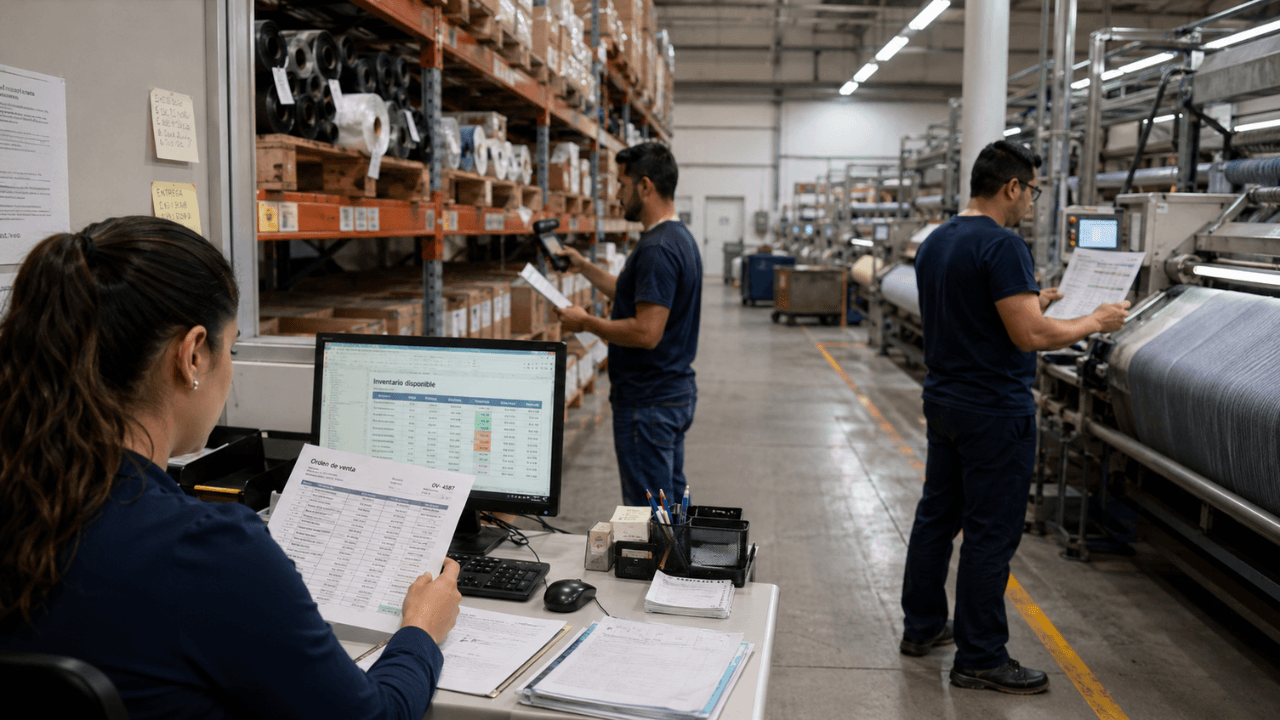
There were instructions on lead times, minimum order quantities and price checks. The problem was that those rules lived in documents that were not connected to the channels the work actually arrived on. Sales replied quickly, because the market expects it. Administration recorded late, because it had to pull the formats into one shape. The shop floor sometimes started from a screenshot or a forwarded message. With recent growth, the odd exception became the daily routine.
Starting work in the workshop from a screenshot
There was no single point of entry for confirmed orders. WhatsApp was fast, and it was unstructured. Long threads mixed price, lead time, a technical reference and changes of mind, in a conversation that was hard to audit. Email left a partial trail, but different sales people used inconsistent subject lines and attachments in different formats. Spreadsheets from industrial customers arrived with their own columns, and someone had to reinterpret them before anything could be made. When an order moved from one channel to another (an initial confirmation by email, then an addition by message), nothing guaranteed that everyone was looking at the final version.
On the shop floor, operators asked twice before cutting expensive material. Logistics reserved components against lists that did not match the latest change from sales, which led to unnecessary stripping-down and to urgent purchases that should not have been needed.
Lead times, margins and conversations with no record
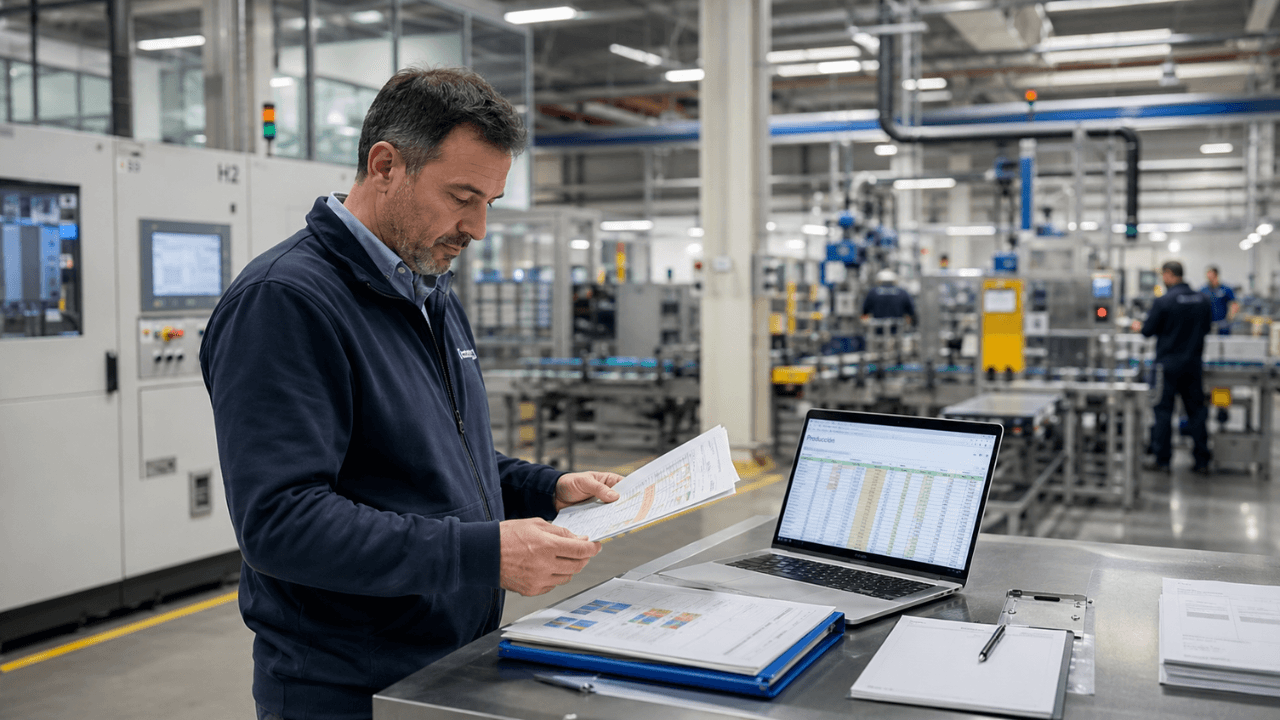
Delays built up, and the cause was not a lack of physical capacity. Time was lost clarifying exactly what had to be made, and in what sequence. Rework and urgent purchases ate into the profit on orders that looked sound on paper. Some customers liked the closeness of a WhatsApp conversation with sales, and reacted sharply when the delivery note did not match what had been agreed in a conversation that administration had never recorded formally. Sales felt criticised for promising speed, while the shop floor asked for paperwork that could be trusted. Administration was overloaded. Management was uneasy about growing the business if that only multiplied the disorder.
Without a reliable view of the backlog, taking on further large jobs was a risk. What was required was simple: no order should reach the shop floor unless it had passed through a single record, with owners, statuses and a history of changes.
Confirmed in one place, by email or by WhatsApp
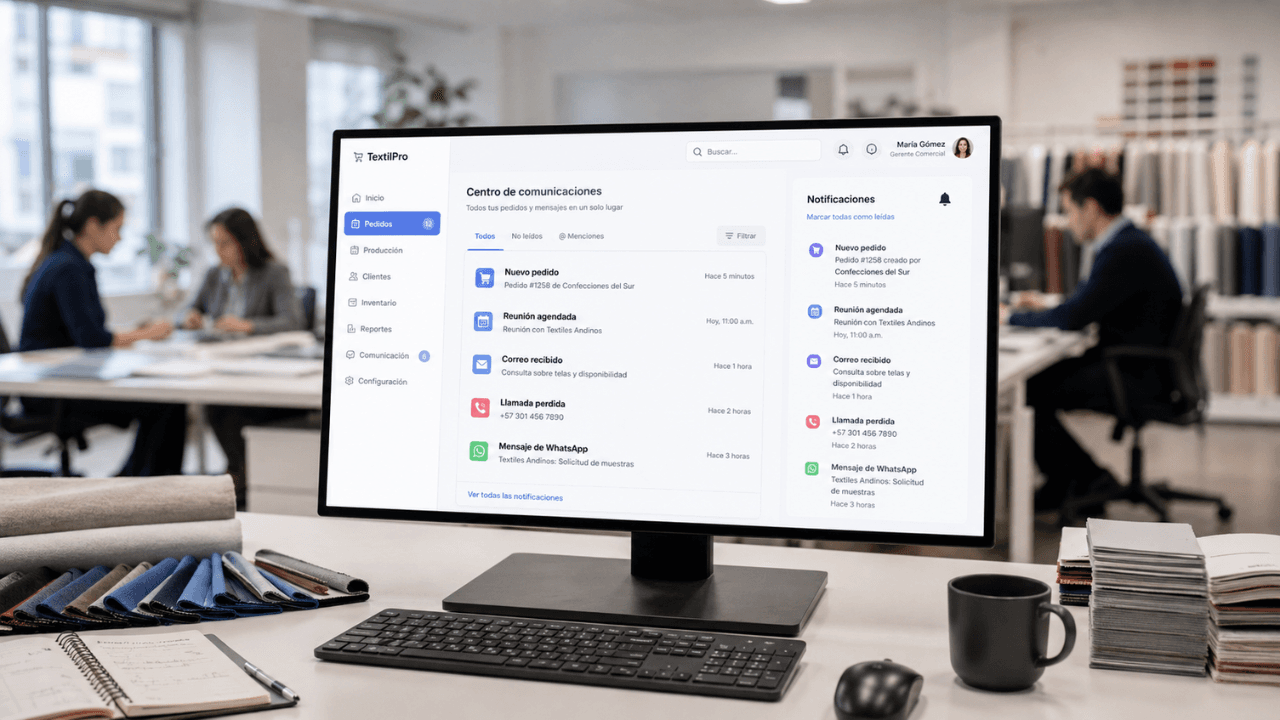
The response combined process discipline with a custom tool. A simple rule was set down and also explained to regular customers: the conversation can start on any channel, but the confirmed order lives in one system, with a number that identifies it. Sales carried on with WhatsApp and email, using short templates to enter the essential data (part number, quantity, requested date, technical notes) before treating the job as closed. Administration stopped rewriting everything from scratch. It checked the record, applied the commercial terms and released the job to the shop floor once the record was complete.
A change history, and queues in the workshop
Each confirmed order created material requirements from bills of materials that were already agreed, which cut manual reservations on side spreadsheets. The shop floor looked at queues by committed date, and not at loose messages forwarded around the building. When a customer asked for a legitimate change, the order history showed what had changed, who had authorised it and when. Customer spreadsheets were not banned. They were imported through mandatory fields, so a line could not be left ambiguous. Internal alerts fired when an order stayed in draft for too long. The first implementation took a few weeks, and was later extended to more complex variants.
Different channels, one confirmed record
The results showed up in the daily rhythm before they showed up in any large presentation. Administration recovered capacity, because it was no longer the only translator between informal conversations and formal orders. The shop floor started with fewer trips back and forth, and fewer incidents caused by two readings of the same job. Sales kept the closeness with customers. Quick messages are still part of the day, with the reassurance that what was agreed is on the record. Management could see the real backlog, and could decide on capacity from numbers that everyone shared.
Within a few months, complaints about a gap between what was discussed and what was delivered came down. Serving customers by WhatsApp, email and Excel is compatible with rigour in the workshop, as long as there is a single place where the confirmed order comes together.