Garment making in the Maresme, with customers across Spain
A factory between Mataró and the coast has been making workwear and technical garments for more than twenty years. Sales, administration, making-up and logistics serve customers in Catalonia and in the rest of the country, using email, WhatsApp and Excel sheets in shared network folders.
Years earlier they had looked at a generic management package. The demonstration showed standard distribution screens, not breakdowns by size, colour, fabric and finish. They stayed with Excel while orders were predictable. When online sales grew, sales and logistics started seeing different things far too often.
Sizes, colours and four versions of the same order
There was no single record per order running through sales, administration, making-up and the warehouse. A customer confirmed quantities by email, asked a trusted sales contact for a change on WhatsApp, and then received an invoice that did not match the one the workshop had printed. Administration copied figures by hand from the inbox into a master sheet. Making-up worked from printed lists that were sometimes updated once a day. Logistics noted receipts and issues on another table, with its own rules for reservations and for what counted as available. Asking how many units were left of a given reference depended on who was asked, and on which file had been updated most recently.
In textiles, the gap between what has been sold and what can be made is multiplied by the variants. A transcription error ends in a bad cut, or in surplus that ties up space and cash. Logistics reserved fabric on criteria of its own, and making-up used raw material without always writing the figure back to the same place. Mondays were for lining the versions up, instead of planning the week.
Gaps between what was sold and what was in the factory
Demanding customers began to notice. Partial deliveries were late because one size had been made in excess and another had been made short. There were administrative returns over differences between the delivery note and the original order. Sales time went on clarifying points that should already have been closed. Inside the company, logistics blamed administration for late data, making-up wanted definitive lists before midnight, and sales defended changes that were legitimate and had never been written down anywhere. A large part of the day went on checking, copying and chasing information.
With more sales coming through digital channels, the lead time promised on the website sat against physical stock that nobody could see in real time. The urgent task was to stop working from four different versions of the truth about the same job.
One record per order, designed for making-up
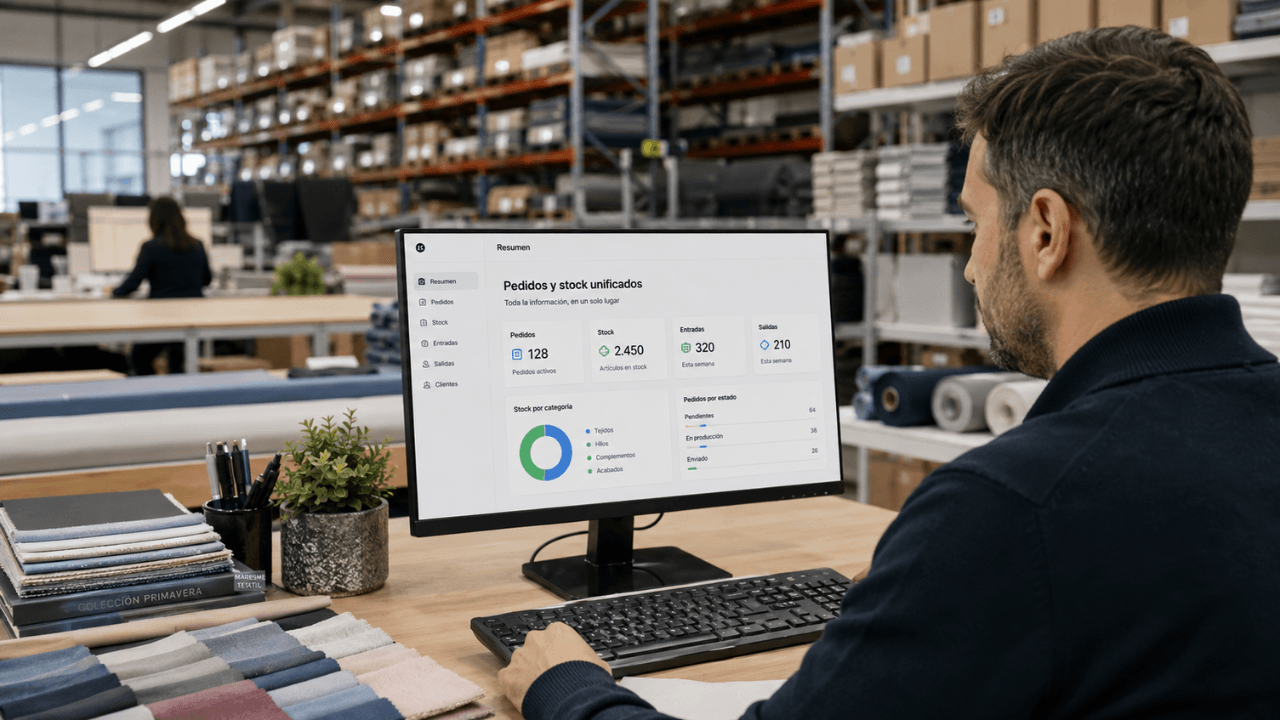
The answer was not new machinery, and it was not a rigid off-the-shelf package. The company chose custom software that started from the real flow: order entry with a mandatory breakdown by size and colour, clear statuses from confirmation through to dispatch, and a single identifier that sales, the workshop and the warehouse could all see. Email and WhatsApp stayed as ways of talking to customers. They stopped being the source of truth. Any change agreed with the customer had to be on the record before making-up was moved or fabric was reserved. The old sheets were kept as read-only for a while, while the team got used to simple screens in goods inwards, on the shop floor and in the warehouse.
Phases, and rules the workshop would accept
The project was limited to phases. First, confirmed orders and reservation of raw material. Then, consumption in making-up and availability for sale. Last, a connection to one specific web channel. Stock stopped being calculated with different formulas in separate files. What had been received went in. What had been delivered, and what was committed on open orders, came out. Agreed rules covered goods in transit and units under review. Making-up received its lists from the same data that sales could see, and logistics printed labels and delivery notes tied to the order number, without typing the quantities again.
Fewer Mondays spent reconciling
Within a few months, incidents over the wrong size or the wrong colour fell. Monday meetings became a short review of exceptions. Sales recovered time to visit customers. The plant manager stopped chasing paper and started checking a shared status before releasing each batch.
Rush jobs, busy seasons and outside suppliers with their own lead times are still there. The difference is that the company now works from one version of the order and from one shared rule for stock. For a textile SME in the Maresme, that step meant modernising the office without giving up the flexibility the sector asks for.