Parts and assembled units from the Maresme
A manufacturing company with its own factory, in an industrial area of the Maresme close to Mataró, supplies parts and assembled units to installers and distributors across Catalonia. Its catalogue runs to hundreds of active part numbers, with slight variations in finish or packaging. Purchasing used supplier codes, the shop floor used internal names, sales used descriptions written for the customer, and logistics used simplified labels.
The accounting system recorded overall receipts and issues with reasonable accuracy. In the factory, three realities sat side by side: what the standard package said, what operators counted in Excel, and what sales saw on sheets updated by hand. A large order was blocked for lack of a component that was in fact on the shelf, under another code.
Three lists that did not name the same thing
At the centre of the mismatch was a spread of duplicate and near-duplicate part numbers, for the same item or for variants that should have been treated as one. A screw from a different supplier appeared as two materials. A finished kit was recorded both as a finished product and as the sum of its components, with no clear rules for converting one into the other. Parts with a small difference in colour were kept apart when they should have been consolidated for sale. Each duplicate carried partial movements: receipts on one record, issues on another, and stock adjustments that fixed the symptom and left the cause in place.
Purchasing ordered from one list, goods inwards booked receipts on another basis, and sales promised from a third reading of what was available. Reservation rules lived on a shared sheet, with fragile formulas that few people knew how to maintain. When someone inserted rows outside the template, or duplicated a part number through a typing error, the system had no automatic way to catch it. Cyclical stock counts were stressful events. Whole teams stopped work to count physically, while arguing over which code should absorb the differences.
Sales on hold and duplicate purchases
Sales stopped trusting the lists and started confirming orders by phoning logistics. Purchasing raised urgent orders because the system showed a stock-out on one part number, while a duplicate was hiding stock that was actually there.
Logistics felt the work on the floor was sound, and that they were being criticised for bad data. Management came to see that reliable stock was not a matter of counting more carefully once a year. It was a matter of governing part numbers, and of one shared rule for naming them. While several languages were used for the same thing, any software would inherit the disorder. The question stopped being which package to buy. It became how to define an item structure that matched the physical goods and the way the business sells.
An item master and reservation rules
The response was designed as two layers that lock together. First, a clean-up of part numbers, with explicit rules: what counts as a single item, when a variant deserves its own code, and how kits relate to components. Second, stock and shop-floor software that applied those rules to daily movements, reservations and traceability. Product families with the fastest movement and the most errors were taken first. Nobody tried to make the catalogue theoretically perfect in a weekend.
Historical aliases, without breaking old documents
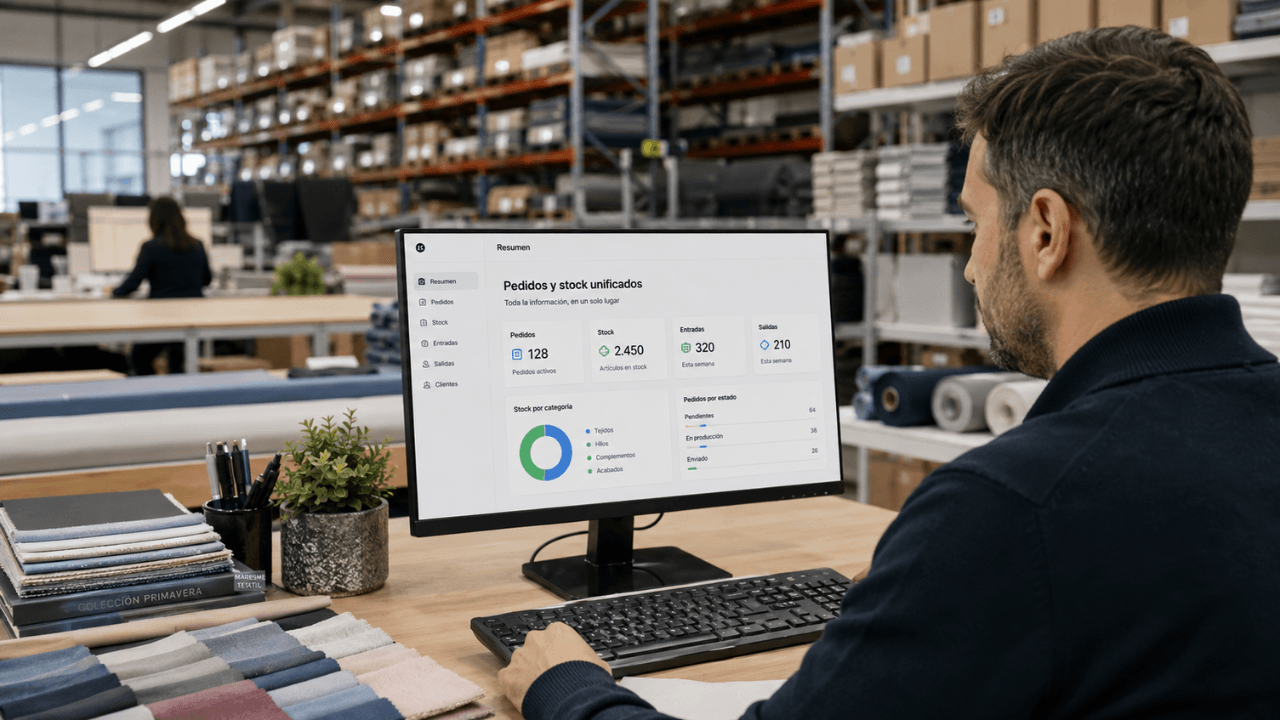
Obsolete part numbers were marked as historical aliases that pointed to the master code. Old documents stayed intact, and new movements on duplicates were blocked. Logistics received simple procedures for creating items under control, and a short form for proposing new part numbers that had to be approved first. Each confirmed order reserves stock against the correct code and deducts it automatically from availability, calculated with rules agreed between sales and logistics. The shop floor consumes materials against bills of materials linked to the item master. Sales has one view of what is available, with a clear split between physical stock, reserved stock and stock in transit. The accounting system received periodic exports aligned with the new structure, without a full replacement of the finance back office.
Stock that can be checked without calls across the floor
Once the new model had settled, phantom stock-outs fell, and so did urgent purchases caused by coding errors. Sales regained the freedom to confirm lead times by consulting a single figure.
No tool on its own clears years of duplicates. A clear rule, held in the software, stops the problem growing again unnoticed. For this company in the Maresme, trusting the figures again meant they could sell with more ambition, without the fear of promising what was not there, or of overlooking what was already on the shelf.